
Online collaboration offers learners new opportunities. Alistair McNaught explores the inclusion pros and cons. There are many pros… ‘Collaborative’ is not new; but it’s better now Collaborative approaches have been around since the first hunter-gatherer apprentices worked together to net birds on the marshy shores of Doggerland. But digital technologies have brought new opportunities. Learners […]
Category: Teaching
Disability statistics are stark: Government statistics show Disabled people are around 3 times as likely not to hold any qualifications compared to non-disabled people. They are half as likely to hold a degree-level qualification. 19.2% of working age disabled people do not hold any formal qualification. Compare that with 6.5% of working age non-disabled people. […]
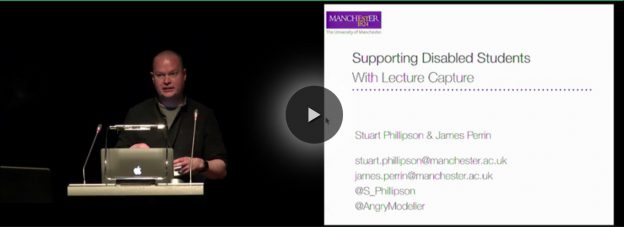
Lecture capture is a subject that often generates healthy discussion (and often debate) across academic communities and over the last few years we’ve seen the emergence of a range of differing approaches. Some institutions have embedded lecture capture into policy in order to adopt a more universal way of embedding anticipatory arrangements as part of […]
Global Accessibility Awareness Day (GAAD) GAAD on May 18 is a day designed to remind those who shape our digital world that they have a critical role in making our future world accessible to everyone. Most designers work to accessibility standards and guidelines that consider the diversity of ways that people access webpages, software and mobile […]
What if your digital strategy could… reduce the cost of supporting learner achievement provide a framework for addressing new requirements and responsibilities – without increasing the risk of exclusion identify opportunities for technology to extend and improve engagement and encourage innovative teaching practice at the same time The accessibility and inclusion subject specialists help Jisc members find practical, […]
Our Jisc Learning analytics –Data and disadvantaged student’s webinar in February was well attended. If you missed it, don’t worry, you can still view the recording and download the slides. As anticipated, the audience was diverse. Staff from disability support services, teachers and data managers were attracted by the deliberately broad-ranging title. Our aim was […]
The number of disabled students – or students with additional support needs – is rising. There may be many reasons, but the best reason is that we are becoming more aware of the issues. But ‘more aware’ of the problems doesn’t mean more aware of the answers. In this blog, Alistair McNaught gives some advice […]
Technology often overtakes ethics. Lecture capture is one such example, with powerful (and sometimes controversial) implications for accessibility. Sue Watling, Academic Advisor for Technology Enhanced Learning at the University of Hull, muses on the issues in this guest post. Opt-in? Opt-out? When it comes to institutional policies on the recording of teaching, the answer […]
A missing half million? Half a million dyslexic students may have missed out. According to the 2015 figures for England[1] the overall entry for GCSEs in summer 2015 was 4,916,000. Given the demography of dyslexia we could expect 10% of students benefitting from exam papers in accessible digital format, using inbuilt or third party assistive […]
Funding changes in Scottish FE sector prompt Margaret McKay to reflect on the wider opportunities for colleges to embrace digital inclusion in widenening participation… A review of funding to support disabled students in FE colleges in Scotland was undertaken last academic year (2015-2016). Engaging with a wide range of stakeholder groups, the Scottish Funding Council […]